
Why isn’t Anybody Designing Freedom?
Since the 1970s, our institutions have become more oppressive. Why?


What Happened to Management Cybernetics?
The Designing Freedom radio series in 1973 presented a clearly articulated diagnosis of the threat to our freedom posed by our dinosaur institutions – the very institutions proudly claimed to guarantee that freedom. It also uncannily predicted the threat of an electronic mafia emerging and a vision of a better outlook.
So, did anybody beat a path to Stafford Beer’s door to get help upgrading their institutions? If so, where are those upgraded institutions?
I wrote here about Kevin Kelly’s book on Complexity Science, first published in 1992. He said:
A short-hand synopsis of Out of Control would be to say it is an update on the current state of cybernetic research.
He then went on to ask “why the cybernetics movement died”. In his discussion of the subject, he doesn’t even mention management cybernetics, probably because he had never heard of it, nor its founder, Stafford Beer.
At the time he presented the radio series in November 1973, Beer was at the height of his prestige, but he was about to lose it.
He was clearly traumatised by events in Chile. Given his background and the state of knowledge at the time, it would not have occurred to him to seek psychotherapeutic help. Having done everything he could for his associates who had been driven out of Chile, he turned in his distress to his religious background, abandoning the trappings of material wealth and becoming a hermit in his cottage in Wales:
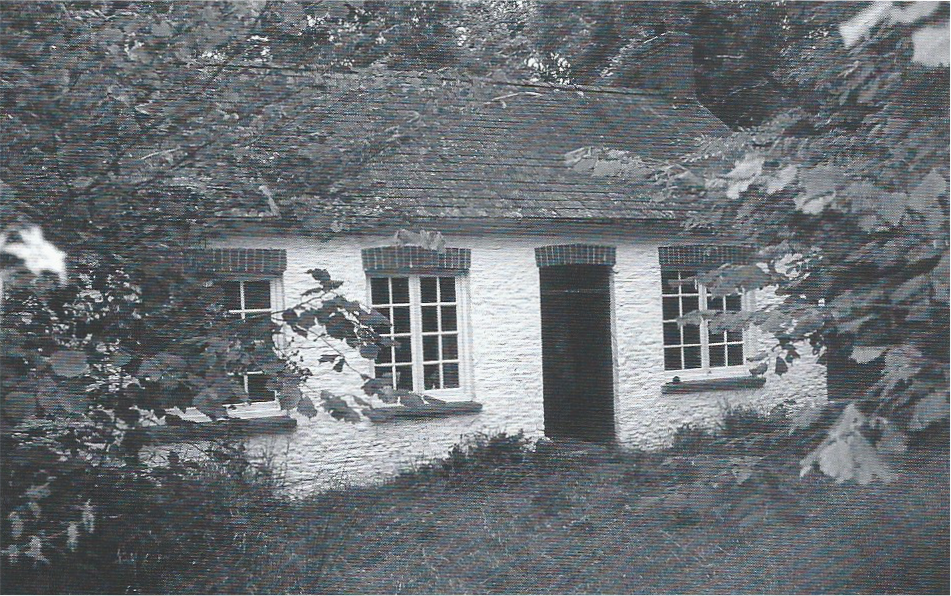
As the founder and most prestigious practitioner of Management Cybernetics, his retreat left the field adrift. Few people in the USA or UK wanted to be tarred with the brush of being in cahoots with the Soviet Union, an accusation unfairly levelled at Allende’s regime in Chile, so Beer’s disappearance from active life made it easy to quietly forget about Designing Freedom.
Complexity Science ignored the Nature of our Organisations
By the time Complexity Science was becoming fashionable in the 1990s, and Kevin Kelly was writing about it, as we discussed here, the critique of conspicuous consumption which had been common in the 1970s had been forgotten:
Too many of us now tend to worship self-indulgence and consumption. Human identity is no longer defined by what one does, but by what one owns. But we’ve discovered that owning things and consuming things does not satisfy our longing for meaning. We’ve learned that piling up material goods cannot fill the emptiness of lives which have no confidence or purpose.
Jimmy Carter, President of the USA, 15th July 1979
I recall reading early editions of Wired magazine, edited by Kevin Kelly, and noting the combination of highly intelligent content with glossy advertisements for very expensive consumer goodies. This was a novelty at the time, but has become an enduring feature of internet culture. It lacks any deep critique of the institutions that have spread this culture across the world, mostly ignoring the psychological damage they cause and claiming that attempts to regulate the industry stifle innovation and freedom.
This leads to a key question that needs to be addressed:
Does the Public Really Want Freedom?
The Magician’s Dinner
There was once a magician who built a house near a large and prosperous village.
One day he invited all the people of the village to dinner. “Before we eat,” he said, “we have some entertainments.”
Everyone was pleased, and the magician provided a first-class conjuring show, with rabbits coming out of hats, flags appearing from nowhere, and one thing turning into another. The people were delighted.
Then the magician asked, “Would you like dinner now, or more entertainments?”
Everyone called for entertainments, for they had never seen anything like it before – at home there was food, but never such excitement as this.
So the magician changed himself into a pigeon, then into a hawk, and finally into a dragon. The people went wild with excitement.
He asked them again, and they wanted more. And they got it.
Then he asked them if they wanted to eat, and they said that they did.
So the magician made them feel that they were eating, diverting their attention with a number of tricks, through his magical powers.
The imaginary eating and entertainments went on all night. When it was dawn, some of the people said, “We must go to work.”
So the magician made those people imagine that they went home, got ready for work, and actually did a day’s work.
In short, whenever anyone said that he had to do something, the magician made him think first that he was going to do it, then, that he had done it, and finally that he had come back to the magician’s house.
Finally the magician had woven such spells over the people of the village that they worked only for him while they thought that they were carrying on with their ordinary lives. Whenever they felt a little restless he made them think that they were back at dinner at his house, and this gave them pleasure and made them forget.
And what happened to the magician and the people, in the end?
Do you know, I cannot tell you, because he is still busily doing it, and the people are still largely under his spell.
From Seeker After Truth by Idries Shah, ISF Publishing, 2018
Beer’s radio lectures were addressed to the well-educated, affluent Canadian public. He referred to The Future that can be Demanded Now, but the Canadian public did not demand it and nor has the general public anywhere else since.
Is this because most of us prefer to be guests at The Magician’s Dinner? Does our demand for intellectual and emotional stimulus override our demand for freedom, which requires us to take responsibility as active citizens participating in building the future of our communities?
Do we prefer to be New Peasants, instead of democratically accountable citizens?
Some People are Designing Freedom
The situation is not all gloom & doom. There are people all over the world attempting to Design Freedom in many different contexts, but, so far, none of them have scaled up enough to be noticed by the general public.
We will take a look at some of these in subsequent posts and, if you know of any, please let us know by posting a Comment in response to this post.
I already referred here to this:
“The future is already here – it’s just not very evenly distributed”.
I think that applies to Designing Freedom just as it does to many other aspects of The Third System.
Reforming Organisations is Hard
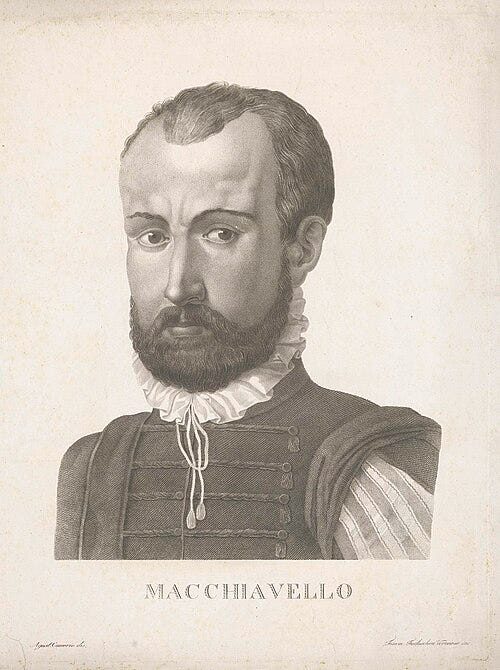
It ought to be remembered that there is nothing more difficult to take in hand, more perilous to conduct, or more uncertain in its success, than to take the lead in the introduction of a new order of things. Because the innovator has for enemies all those who have done well under the old conditions, and lukewarm defenders in those who may do well under the new. This coolness arises partly from fear of the opponents, who have the laws on their side, and partly from the incredulity of men, who do not readily believe in new things until they have had a long experience of them.
from Machiavelli’s The Prince Chapter VI, written in 1513 and published in 1532
As you can see from the above quotation, the difficulty of reforming organisations has been understood for a very long time. But there is a big difference between understanding that a problem exists, and knowing how to solve it.
Stafford Beer made a heroic and worthy effort to not only identify an approach to Designing Freedom, but to communicate to the general public how to go about doing it.
Perhaps the time is now right to follow through on his vision?
Maybe freedom has been designed but not evenly distributed
So what and how do we start demanding?