
What is The Third System?
An Introduction to key ideas about our Research Programme

I briefly explained the idea of the Third System in my first post.
Let’s look into this in more depth.
I read this brief piece by Idries Shah in 1998:
The Third System
There are three convenient stages of human growth: infancy, adolescence and adulthood, which provide us with an adequate comparison standard for three stages of community development.
In the first, visible crudity and destructivity is evident. This is childhood, equivalent to the conquest of territory in the community's life.
The second is characterised by intense emotion, mental activity and insistence upon objectives. Its equivalent is the 'derivative baronial' phase. Instead of conquering national territories, its spread is in domination of the brain (propaganda and publicity) and in energy concentration - commercial and industrial empires.
Communities of all social, political and economic labels operate these systems.
The third type, which is the final phase, and the most effective and constructive, is an organisation which can contribute in so many fields that it cannot be singled out as an enemy, or even as a friend, for its members come from every section of every community. By providing positive and demonstrable gains in such diverse fields as literature, commerce, art, science, psychology and human thought and social relations, it penetrates throughout the interstices of the existing relatively crude systems.
In order to do this, such an entity must be directed by people who understand it as well as the baron understands war, or the tycoon understands business. There are not many such men and women, but they already exist.
This development has been foreshadowed by the attempts of nations, companies and systems to offer their members a wide variety of advantages. But they have all failed because they cannot control their people (control is the wrong method, but they depend upon it) and because they have not been able to supply the creative quota of varied developments which alone could make their organism viable in the new system.
So they have to be content with the new peasantry.
Remember: a peasantry is not a community of impoverished people ruled by rich ones. A peasantry is a community, national or international, which is 'owned': which has its beliefs engineered by propaganda, and its material activities and its diversions provided for it to someone's gain.
Recognise yourself?
Idries Shah Knowing How To Know, Octagon Press 1998
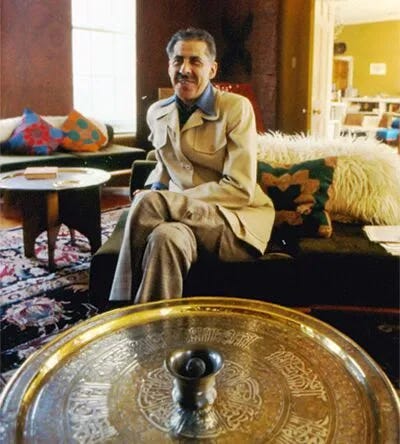
This brief passage suggests a vision of possibility, challenges us to examine ourselves and seems almost prophetic, since it describes the world we live in now far more than it described the world Shah lived in from 1924 until 1996. Are we the New Peasants - owned by the likes of Google, Facebook, Instagram, TikTok and other “free” services on the internet, or by a “benevolent” socialist state with Chinese characteristics, which helps us to achieve “social harmony”?
Like Shah, our interest is not in trying to convert anybody to believe in anything – it is to provide tools and techniques to enable people interested in this vision of the world to see how they can contribute towards it, in the context in which they live.
Of course, not everybody wants to support such a vision, but we are happy to leave such people to pursue their interests, while we pursue ours.
By December 2019, I had done enough work inspired by this vision to outline the Key Concepts needed to bring The Third System to a wider audience. I described them here. You are welcome to go and take a look, but they might look somewhat overwhelming. If so, don’t panic – this Substack will guide you gently into The Third System.
Stay tuned for the next exciting episode….