
Why are we looking forward to AGI, when we've already had it since 1660?
The AI community is trying to create Artificial General Intelligence (AGI), not noticing that we've already had it for over 350 years

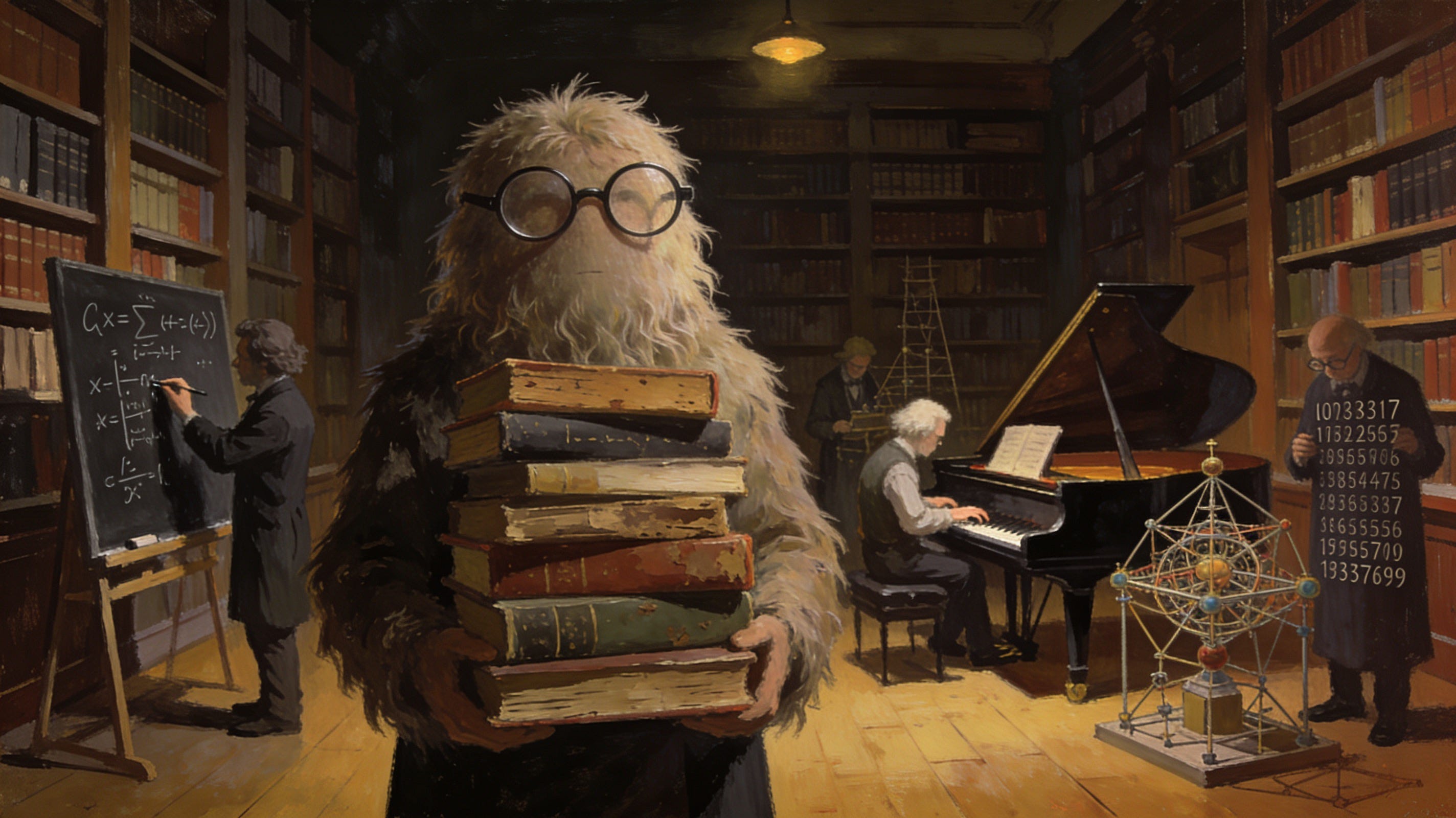
The Turing Test
There is a lot of hope and fear around the subject of when one or more Artificial Intelligences (AIs) will become Generally Intelligent – achieve AGI.
What will happen when computers are smarter than the smartest human beings? Will they be aligned with the interests of humanity?
Some people call the advent of AGI The Singularity, when suddenly, the nature of human life will be transformed, bringing history as we know it to an end.
David Wood, the Chair of London Futurists, proudly refers to himself as being a Singularitarian.
On 2nd October 2025, the Royal Society in London brought together distinguished experts to celebrate The 75th Anniversary of the Turing Test Paper. I had hoped to atttend this event, but could not make it, but you can watch the whole event, in full or in selected presentations, here.
A brief summary of the Turing Test states:
The Turing Test is a way of checking whether a machine can converse so convincingly like a human that a judge cannot tell them apart. It comes from Alan Turing’s 1950 “imitation game” idea.
The Turing Test first appeared in a paper published by Alan Turing in Vol. LIX, No. 236 of the journal MIND – A Quarterly Review of Psychology and Philosophy, published in October 1950:
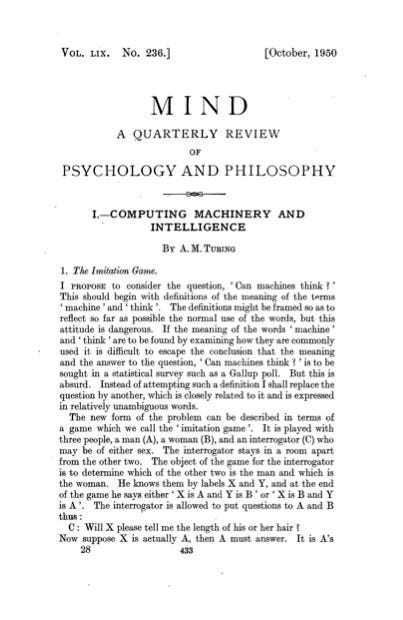
You can find the original paper here.
Reading this paper is a strange experience, casting us back to the year before I was born.
The past is a foreign country; they do things differently there.
Opening sentence of The Go-Between by L P Hartley, Hamish Hamilton, 1953
Turing called his test The Imitation Game, which is also the title of a very inaccurate movie about his life. Many people in the AI community, which can be said to have been founded in the mid-1950s, have pursued the goal of meeting this test, claiming that a machine that meets it is intelligent.
Strangely, the original paper has seven different versions of the test, and Turing also devised an eighth version. The paper rambles all over the place, even including a passing reference to the non-existent Muslim belief that women do not have souls.
One of Turing’s PhD students expressed the view that the paper was really a kind of joke – designed to annoy a lot of academics, so that they would start to take the nascent field of digital computing more seriously.
The general consensus of the experts at the Royal Society event is that the Turing Test is really just a measure of how easily people can be deceived, an unfortunate truth that has been understood very well by marketeers since the 1920s, but was not well understood by Turing or many of his successors in the AI community.
What is AGI?
The first forty-minute keynote speech at the Royal Society event was by Dr Alan Kay:
Kay, now in his eighties, is one of the most significant pioneers of the way we interact with digital computers, having invented object-oriented programming and the main elements of the graphical user interface we still use today, when he worked at Xerox PARC in the 1970s.
His presentation is well worth watching all the way through, but I am going to concentrate on the part starting about thirty minutes in. Here is what he presents at that point:
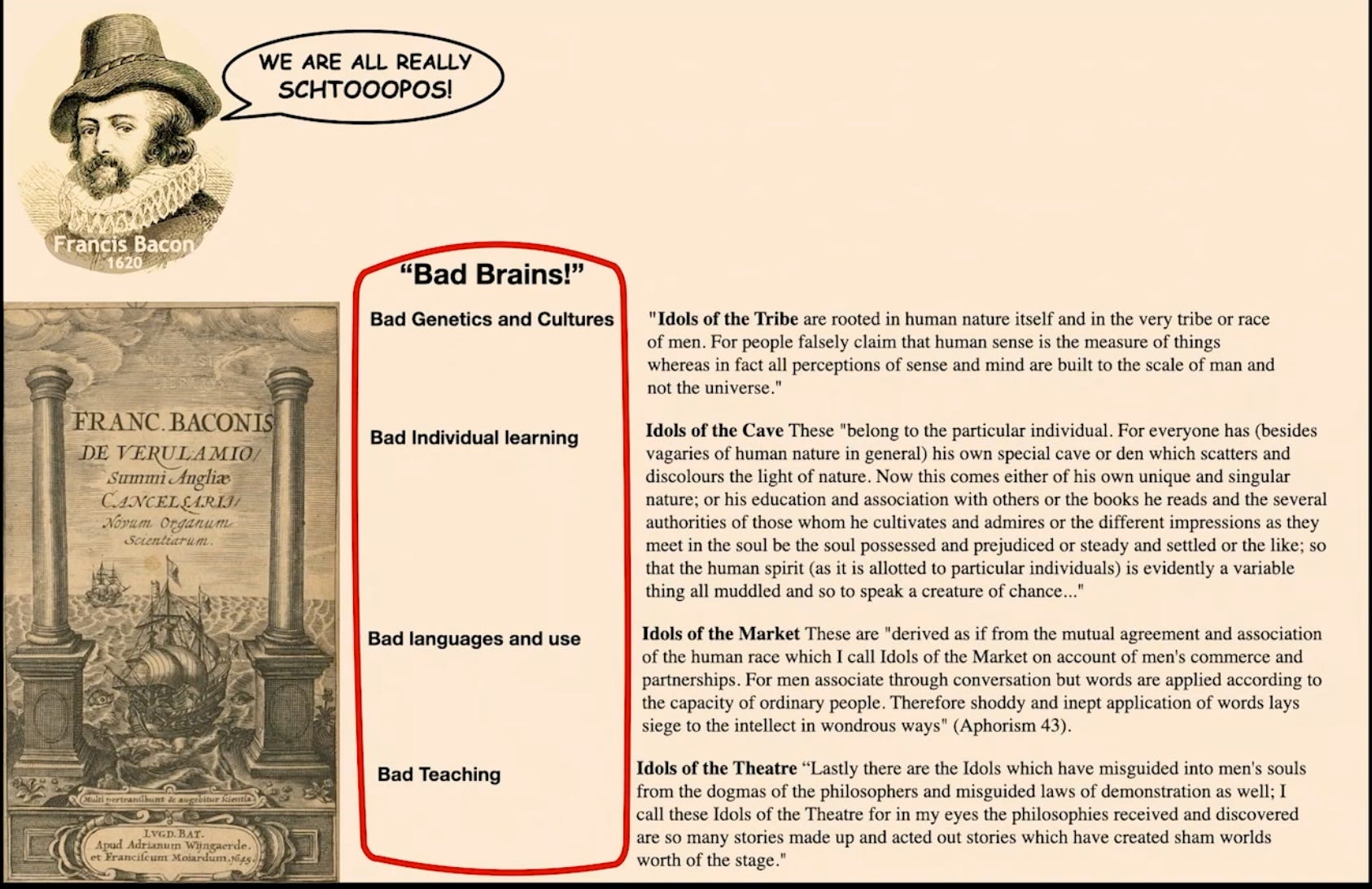
If you read my Substack post here, you will recognise the frontispiece of Novum Organum Scientiarum by Sir Francis Bacon, published in 1620, and his account of the Idols of the Human Mind. The method of acquiring knowledge that he described there was adopted by the Royal Society in the 1660s, which is universally acknowledged as the first modern scientific peer group, and continues to be at the leading edge of science.
So, Alan Kay states here that this governance system, one of the three pillars of the modern world, is itself AGI. The only reason the AI community fails to recognise it as such is that they are obsessed with the idea that intelligence can only be located instead an individual human head, and that the human mind can be equated with the human brain.
One of the other speakers at the same event described trying to create AGI as a pointless pursuit, equivalent to trying to create Artificial Phlogiston or the Artificial Ether. The point she was making is that, in the research communities who have been studying how the human mind actually works, nobody believes that there is any such thing as General Intelligence. The human mind is made up a a series of specialised modules, that are orchestrated to create the illusion of a unified human mind. This has been known since the 1980s, but the AI community has a track record of pursuing its goals in splendid isolation from knowledge available in other fields, such as anthropology, social psychology, and detailed research on how real human minds & brains work.
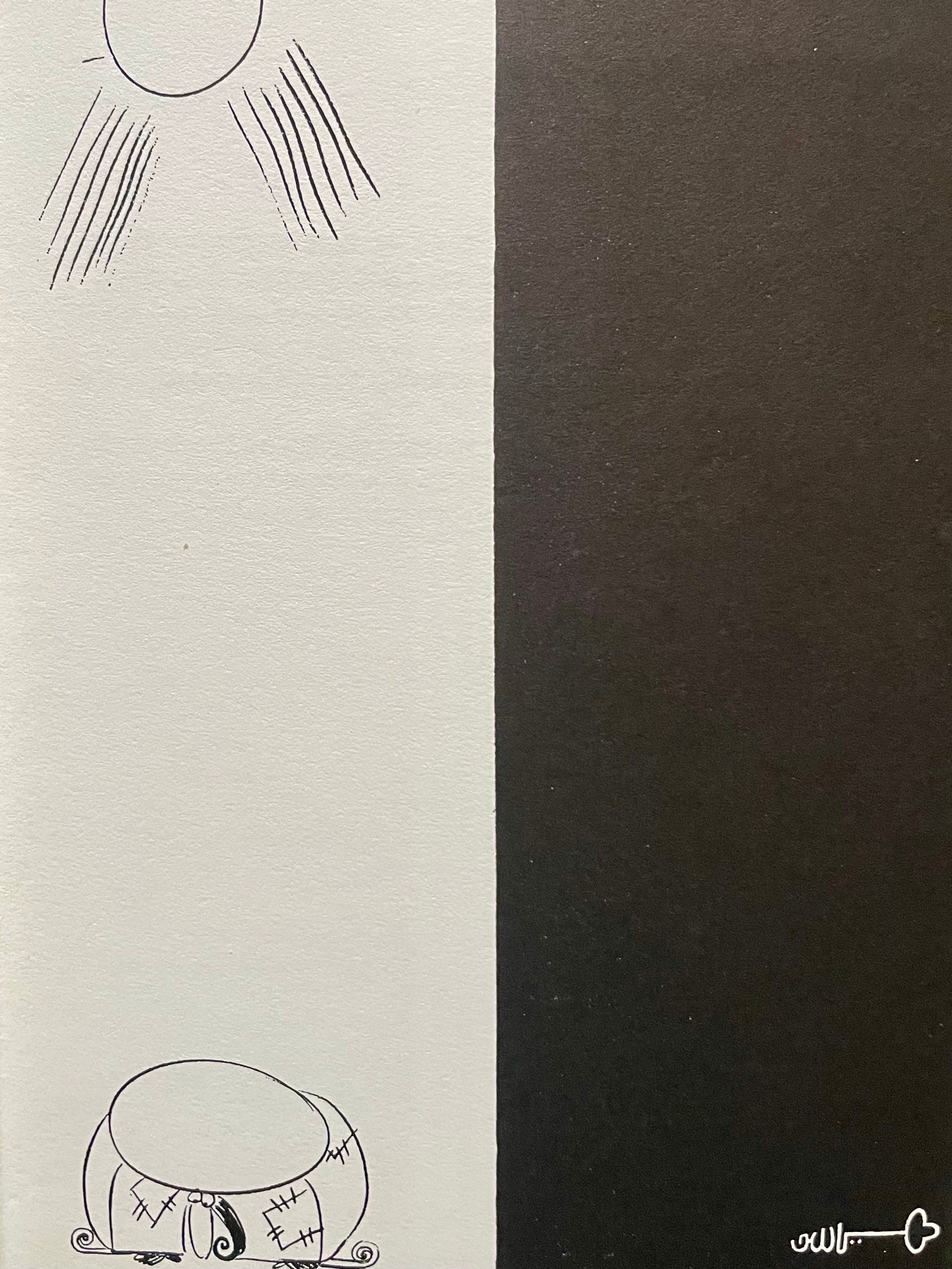
There Is More Light Here
Someone saw Nasrudin searching for something on the ground.
‘What have you lost, Mulla?’ he asked. ‘My key,’ said the Mulla. So they both went down on their knees and looked for it.
After a time the other man asked: ‘Where exactly did you drop it?’
In my own house.’ ‘Then why are you looking here?’ ‘There is more light here than inside my own house.’
P.26 The Exploits of the Incomparable Mulla Nasrudin by Idries Shah, Jonathan Cape, 1966
My Next Post
My next post will be about why the AI community ignores so much established knowledge and why there will be no such thing as the Technological Singularity.
Great post!
Excellent! So we've had one kind of AGI for 350 years, and another kind for about a century and a half: https://hackernoon.com/the-parable-of-the-paperclip-maximizer-3ed4cccc669a
Both of which are currently orders of magnitude more effective that the new sort.
And all of them depend on humans for delivery, though the latest one may differ on that front.
Raising the thought that it is autonomy, not intelligence, which is the concern.
The most interesting / nervousness inspiring work is going on in robotics, where embodied models learning from physical reality systems and LLMs are being harnessed together.