
About Cybernetics – 5
History 2000-2025

This post is the sixth in my series About Cybernetics – What It Is & Why It Matters.
The other posts are:
This series of posts is mostly historical. If you want to jump ahead to learn how to apply management cybernetics to real-world issues, Designing Freedom – 1 is a good place to start.
Death seed blind man’s greed
Poets’ starving children bleed
Nothing he’s got he really needs
Twenty first century schizoid man.
In the Court of the Crimson King, 1969 Lyrics: Peter Sinfield
2000s
Politicians Concentrate on How to get Re-elected
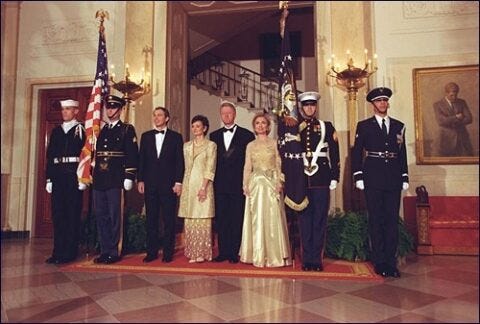
In the nineteenth and twentieth centuries, politicians seeking election in the West were expected to present policy positions to their electorates, who were supposed to rationally consider these, when deciding who to vote for. The main medium for political campaigning had been the written word and long, oratorical speech-making.
But, as television became the main medium for campaigning, and the news cycle accelerated, politicians increasingly concentrated on managing it, and using focus-groups to find out what would get them re-elected.
This shift from pitching policies to managing public relations had been going on for forty years, but it reached perfection in the late 1990s with Tony Blair’s New Labour in the UK and Bill Clinton’s Democrats in the USA.
It was also assumed that the job of government was to deliver obvious goods and services, which was a matter best dealt with by technocratic experts. Questions of social justice and identity were becoming thought of as old-fashioned irrelevancies.
The World worries about Y2K while Brian Eno worries about Y10K
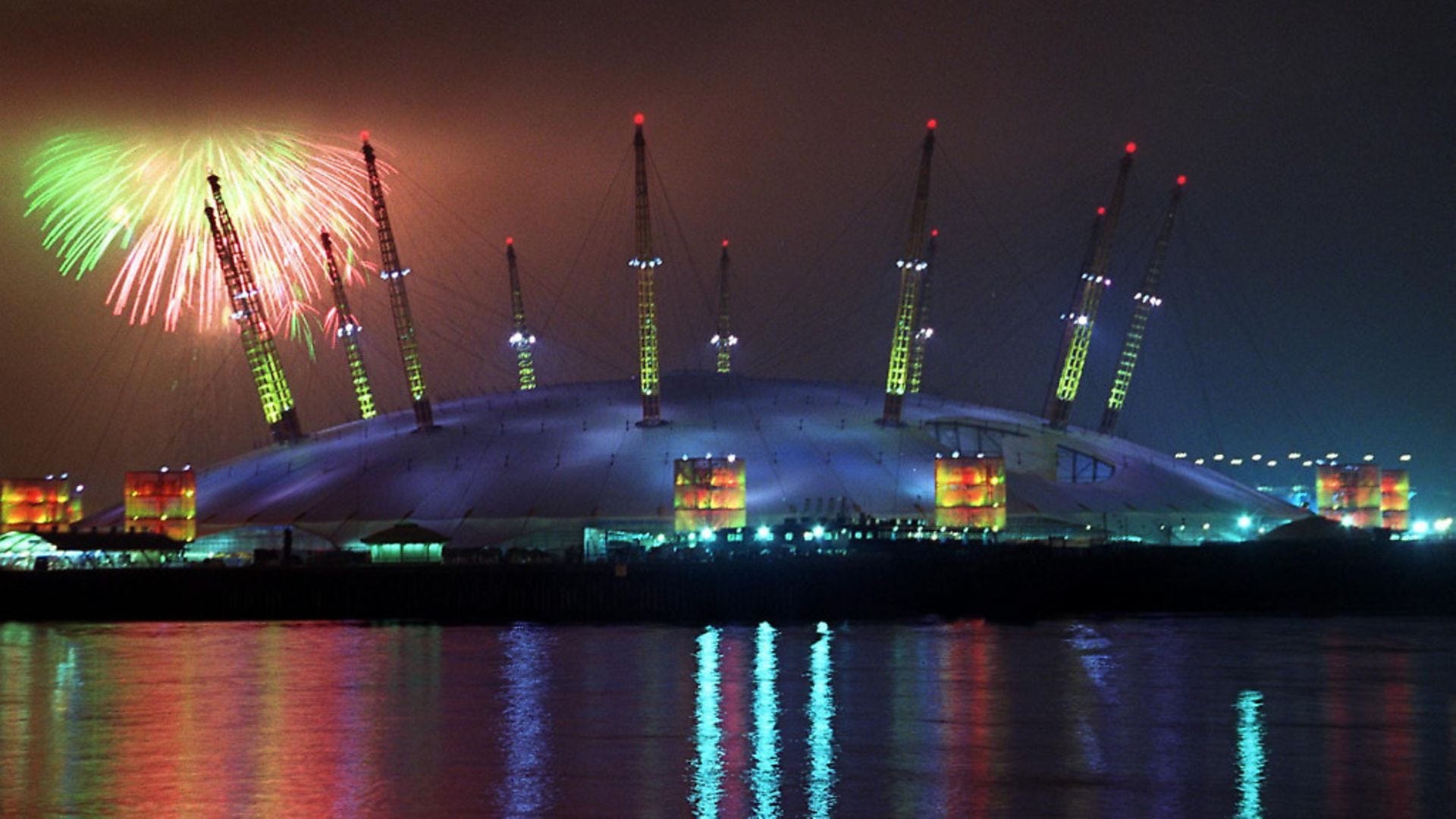
Approaching the Millennium, there was a lot of concern that computers would interpret the year 2000 as the year zero, because their software had not been designed to count years beyond 1999 – the first digit would be missing, so back to zero they would go. Some people even worried that the brakes on their cars would fail, although it was hard to see why anybody would have told them what date it was.
Many retired programmers, who had written systems as far back as the 1960s, still running on mainframe computers, happily topped up their pensions approaching the fateful date, modifying software to cope with Y2K, as it became known.
When the Millennium arrived, we held some great parties and nothing disastrous happened to our computers – no aircraft fell out of the sky, and everything carried on as usual.
The music producer Brian Eno took the view that we ought to be concerned with Y10K, the year 10,000. not just the year 2000. Why were we not serious about the really long-term consequences of our actions? How about what happens when the year 9,999 ends – will our computers think it is the year zero again?
To raise awareness of this matter, he founded The Long Now Foundation in San Francisco and the Foundation supports the work of Danny Hillis on a clock that will still be working twice as far into the future as Stonehenge and the Pyramids at Giza are in our past:
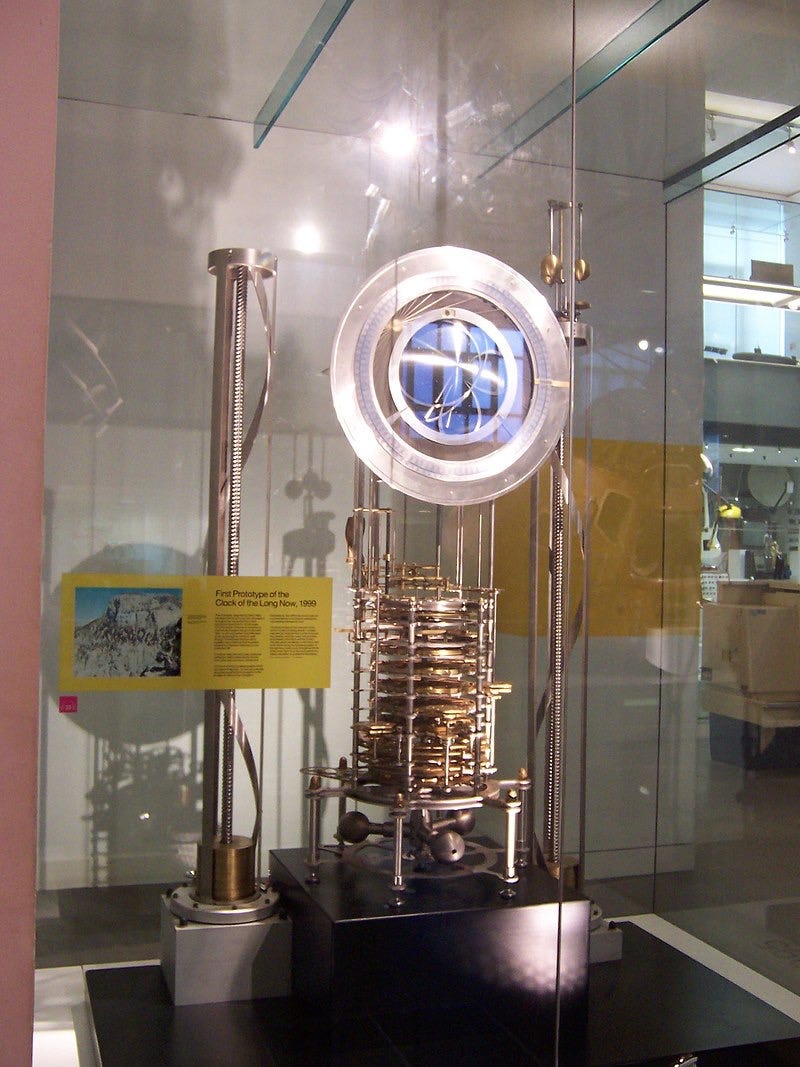
As a Charter Member of the Foundation, I look forward to the opening party for the clock, which is being built into a mountain in Texas, USA.
Sufism is the doing in this lifetime what
any fool will be doing in ten thousand
years’ time.
Observations by Idries Shah, Page 36, ISF Publishing, 2019
As the new millennium dawned, the West, led by the USA, appeared unassailable.
Cool Britannia waived the rules:
The Shock of the 9/11 Attacks on the USA
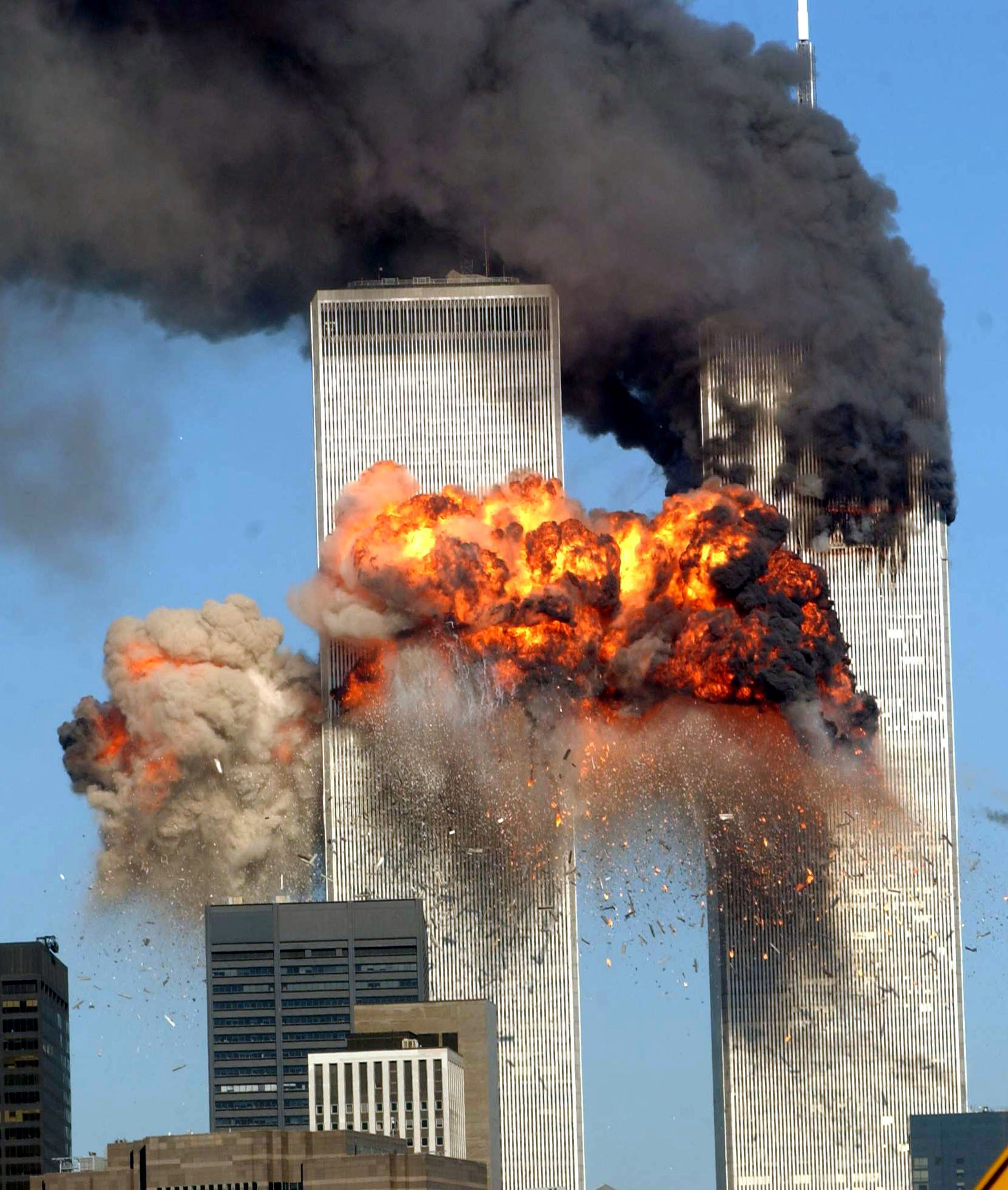
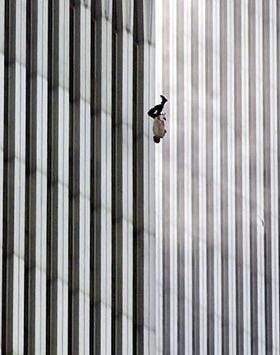
The attacks on the USA by crashing airliners on 11th September 2001 put paid to the prevailing sense of complacency and ushered in an era of asymmetrical warfare that has left Afghanistan under the disastrous rulership of the Taliban, re-shaped the Middle East and North Africa in unintended ways and destroyed the credibility of the USA as the sole super-power underpinning the Rules-Based International Order.
There had been rumblings of the threat of Osama bin Laden’s actions in the 1990s, but they had been largely ignored until the fateful day of 9/11.
Computers go wireless
I said here:
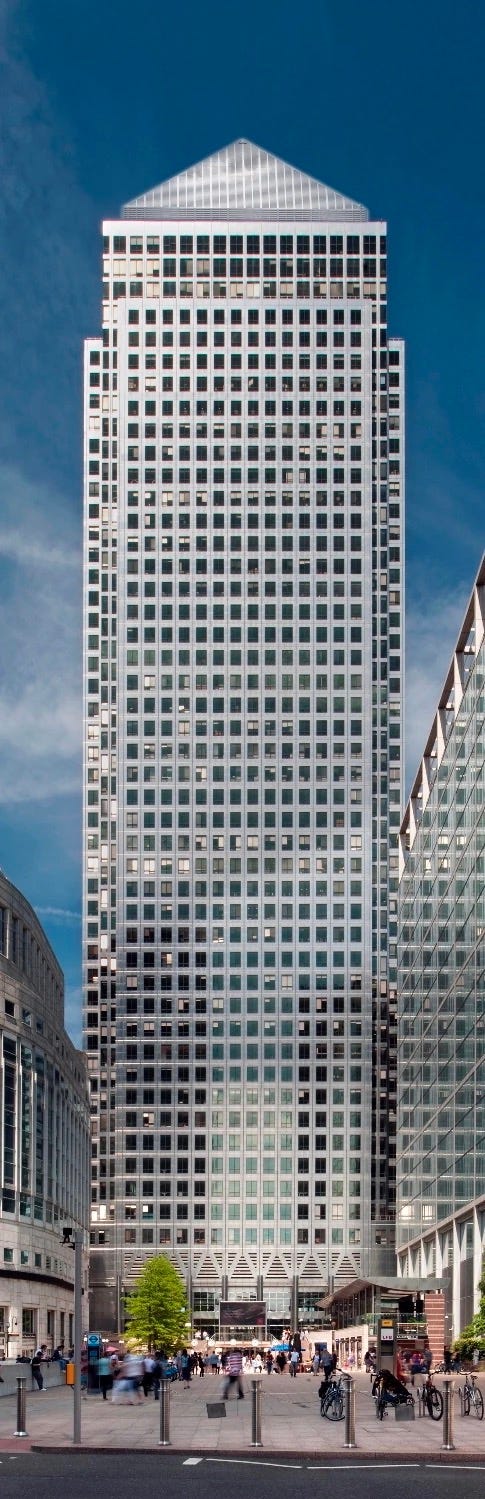
offices had to be re-designed to support the cabling to connect all the desktop computers to local area networks, so that they could communicate with the big central computers and their databases.
This put a premium on expensive, specially designed offices to run the cables to desktops, such as this one in Canary Wharf, London, completed in 1991:
Meanwhile, computers were getting more portable and WiFi was getting so fast that they no longer needed to be connected by cables.
Getting work done with computers no longer required people to be in offices, but old habits die hard.
Smart Phones conquer the world
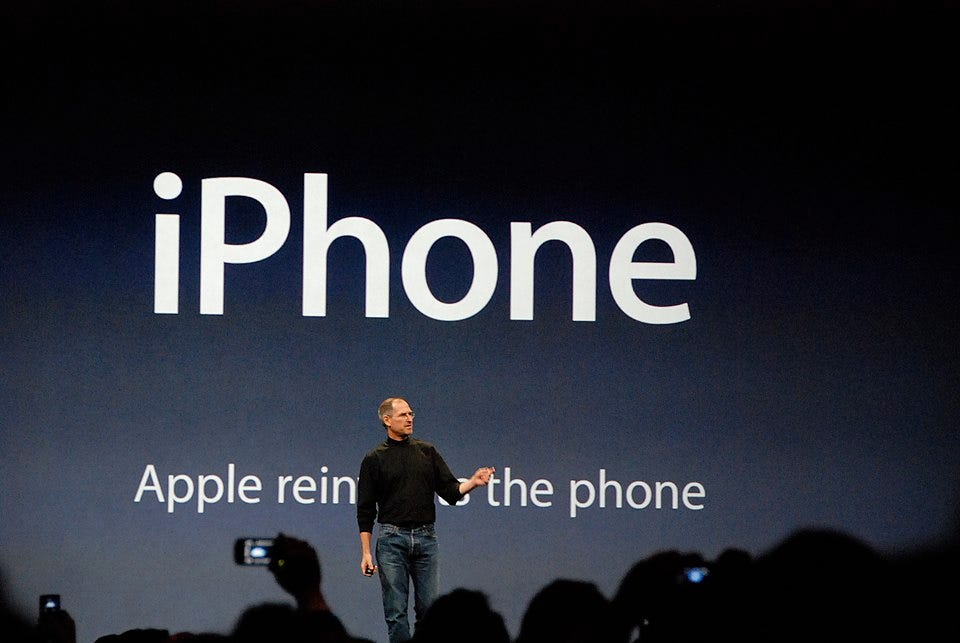
Steve Jobs, the CEO of Apple, presented the first iPhone in January 2007. This was not the first pocket computer that was also a mobile phone, but it was the first that you could control with nothing but your fingers, with apps you could install from an App Store.
This style of smartphone rapidly spread across the world:
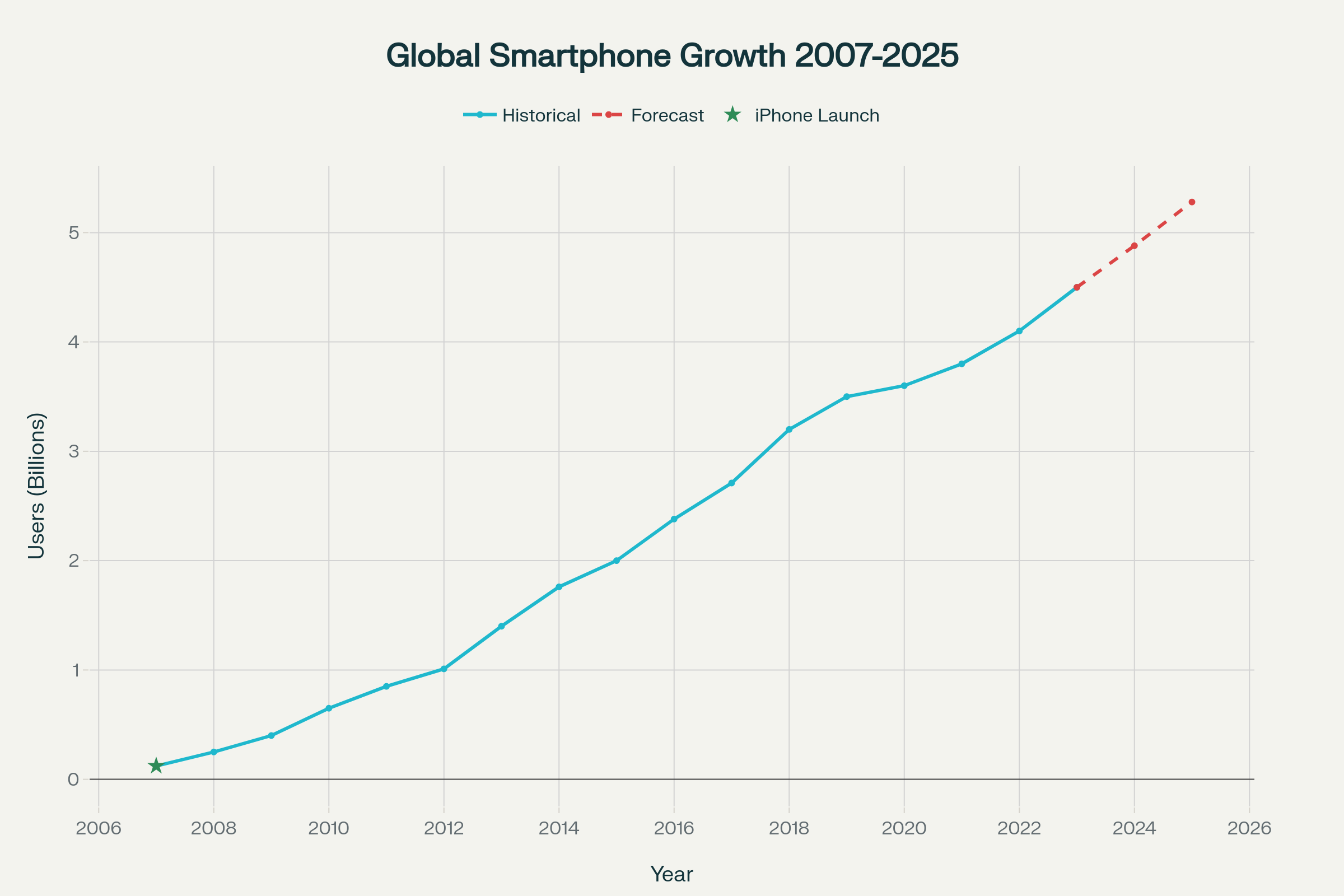
There are now about five billion of them, so most adults in the world have access to one – a strange state of affairs, given that millions of their owners still do not have access to modern sanitation and water on tap, even though those technologies have existed for two centuries.
Social Networks
There are many of these now, but the pioneers that gained massive scale and influence were Facebook and Twitter.
Facebook/Meta Platforms
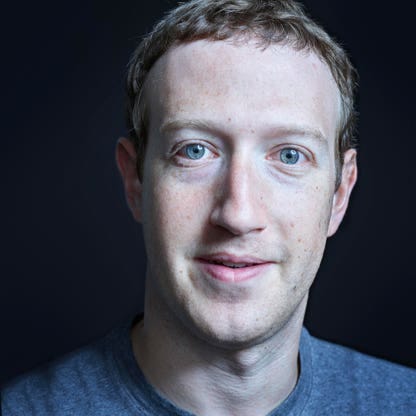
In 2003, Mark Zuckerberg, a student studying psychology and computer science at Harvard University, set up Facemash, a “Hot-or-Not” style web site that ranked student photos and attracted 22,000 votes in two days before its shutdown for privacy breaches. This somewhat creepy experiment led to the foundation of TheFacebook in February 2004, which reached 250,000 Harvard users by the middle of that year. In 2005, this was renamed FaceBook, Inc and opened up to anyone over thirteen. It went on to become a global phenomenon, renamed Meta Platforms in 2021.
Facebook’s mission statement was:
To give people the power to share and make the world more open and connected.
It became a public corporation in May 2012, with a highly profitable business model based on selling advertising.
In 2017, the mission statement was changed to:
To give people the power to build community and bring the world closer together.
It has never been clear to me how this mission is compatible with invading its users’ privacy to sell advertising – for which reason I deleted my account as soon as this business model was announced. My attempt to persuade my nearest and dearest to follow suit failed completely. They did not seem bothered by the aphorism:
If you are not paying for it, you’re not the customer; you’re the product being sold
attributed to Andrew Lewis (blue-beetle), Bruce Schneier and others
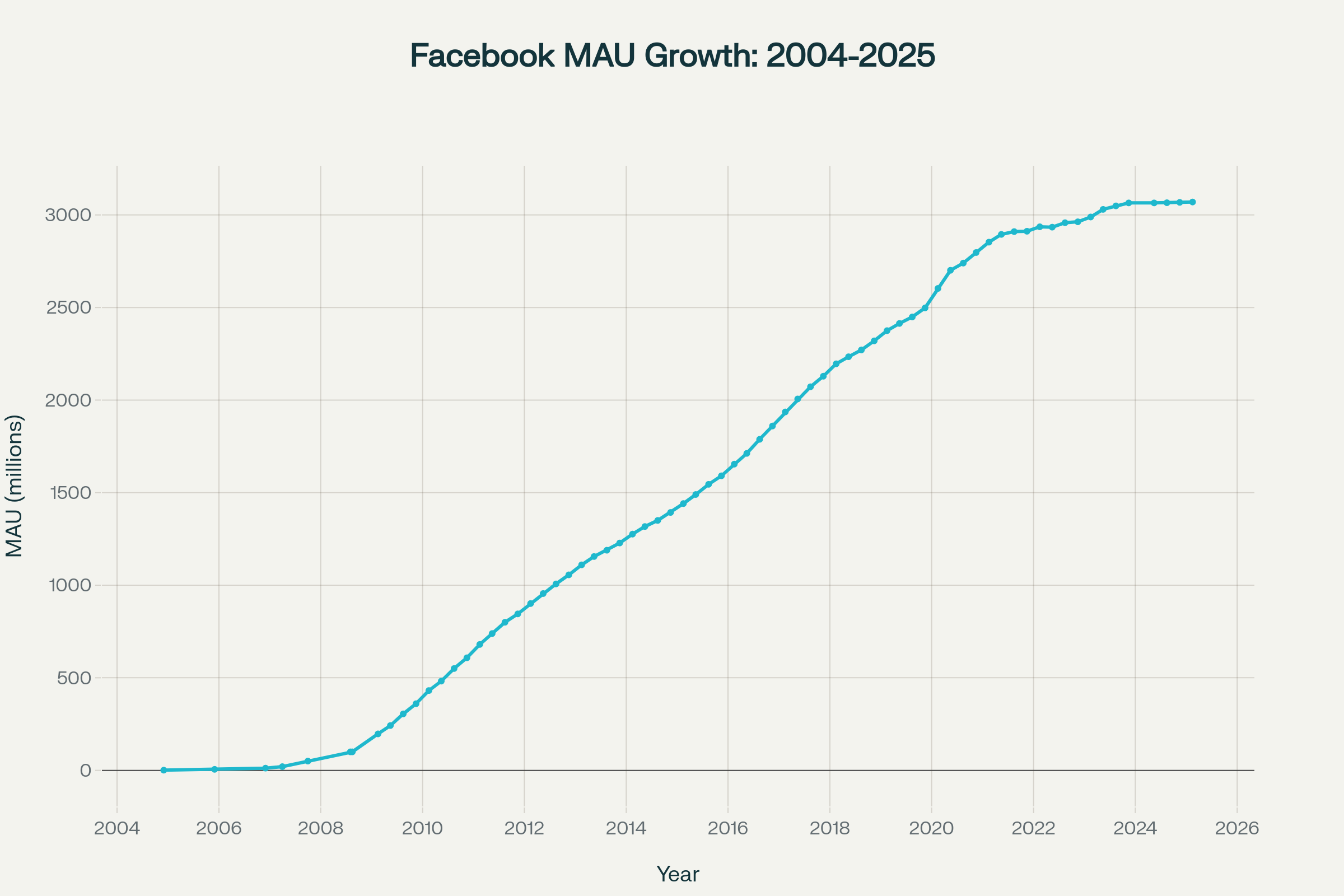
Over three billion people use Facebook regularly:
Twitter/X
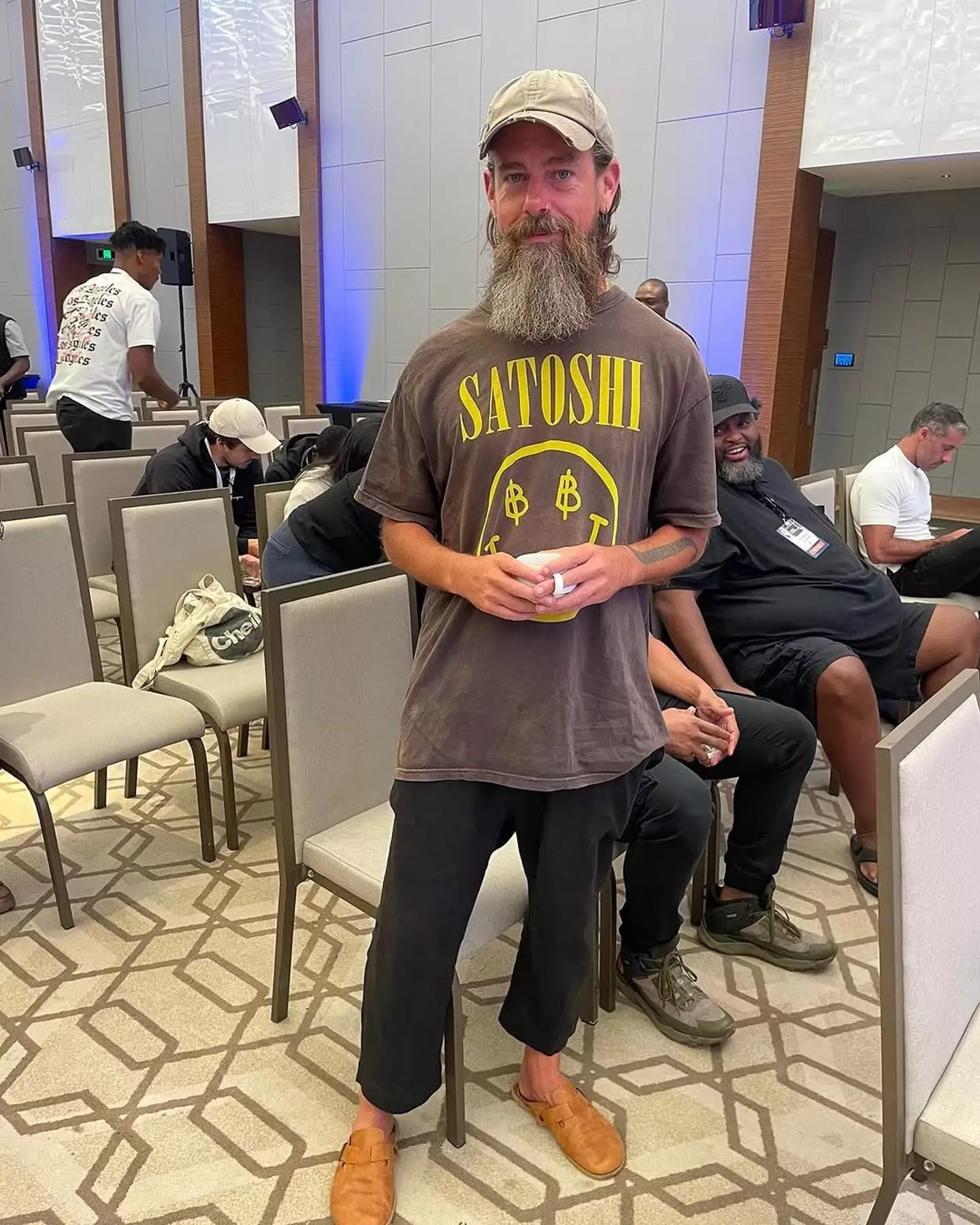
Launched in 2006 as a micro-blogging site, Twitter has been claimed by Elon Musk to be The Digital Town Square – essential to open, democratic debate. He made this claim during his purchase of the platform in 2022. He did not explain why he felt the need to own the Town Square.
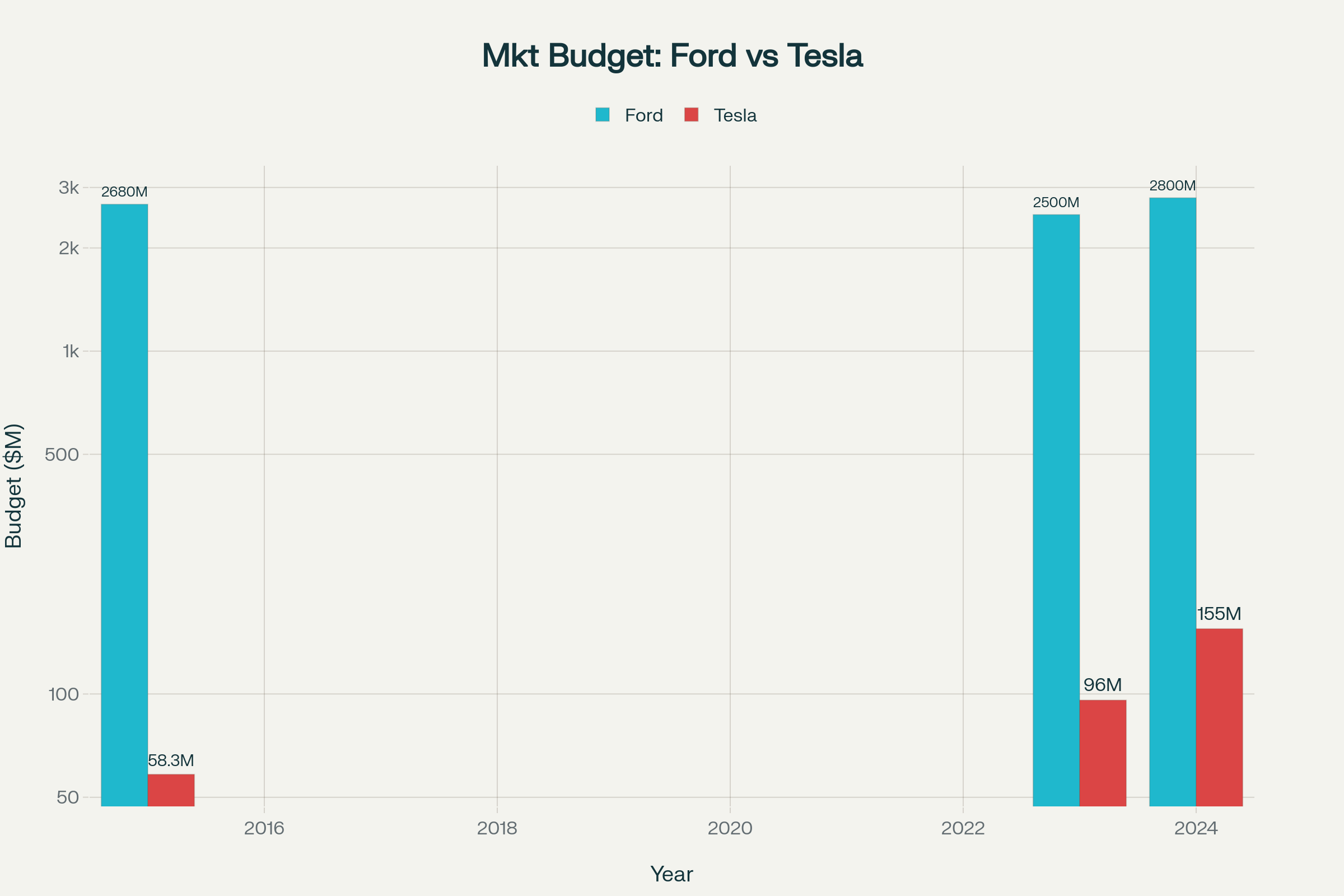
Twitter has been highly significant to the development of a more direct engagement between the public and figures who wish to influence them, such as Donald Trump and Elon Musk. Their skill in using it has delivered a nasty surprise to old-school politicians and marketeers:
The Global Financial System nearly collapses
When he was UK Chancellor of the Exchequer in the early 2000s, Gordon Brown famously repeated that there would be “no more boom & bust”:
He shared the consensus of economists that the problem of economic instability had been solved.
But in the autumn of 2008, the UK banking system was so close to collapse that there was genuine fear that the ATM network would stop delivering cash. By this time, Gordon Brown was Prime Minister. and Alastair Darling was his Chancellor. They played key roles in co-ordinating international action by finance ministers and Central Banks to rescue the private banking system from total collapse.
The deep cause of this disaster was that financial instruments that were believed to be managing risk turned out to be hiding it. A downturn in the US property market in 2007 triggered a cascade of collapse in the value of exotic financial instruments which were supposedly risk-free, and the global financial system went down like a house of cards.
These events profoundly undermined trust in the global financial system, leading to questions about the viability of fiat currencies such as the US dollar, which had ceased to be underpinned by fixed-price gold reserves in 1971.
The financial system was patched up, bank regulations were tightened to manage risk better, and business-as-usual re-asserted itself.
Satoshi Nakamoto Launches Bitcoin
Since the late 1980s, various online communities had been thinking about the idea of decentralised electronic money. The most famous called themselves cypherpunks. They were trying to enable internet users to pay each other without needing to rely on trusted third parties such as banks. But they had been unable to solve the problem of how to guarantee that the same funds could not be spent more than once.
Then on 31st October 2008, Satoshi Nakamoto published The Bitcoin White Paper:
Abstract. A purely peer-to-peer version of electronic cash would allow online payments to be sent directly from one party to another without going through a financial institution. Digital signatures provide part of the solution, but the main benefits are lost if a trusted third party is still required to prevent double-spending. We propose a solution to the double-spending problem using a peer-to-peer network. The network timestamps transactions by hashing them into an ongoing chain of hash-based proof-of-work, forming a record that cannot be changed without redoing the proof-of-work. The longest chain not only serves as proof of the sequence of events witnessed, but proof that it came from the largest pool of CPU power. As long as a majority of CPU power is controlled by nodes that are not cooperating to attack the network, they’ll generate the longest chain and outpace attackers. The network itself requires minimal structure. Messages are broadcast on a best effort basis, and nodes can leave and rejoin the network at will, accepting the longest proof-of-work chain as proof of what happened while they were gone.
He had used a novel form of computer database called a Blockchain to solve the double-spending problem. On 3rd January 2009, Nakamoto launched the Bitcoin Blockchain with the so-called genesis block containing the text The Times 03/Jan/2009 Chancellor on brink of second bailout for banks. This made it pretty clear what motivated him.
The first transaction, a payment of 10 BTC, was made on 12th January 2009.
Many in the cypherpunk community consider Bitcoin to have failed as a payment system – transactions are too slow and expensive to be of much practical use. But Bitcoin has survived as a speculative asset and a way of evading banking regulations, traded on electronic exchanges all over the world. Some people insist that it is a store of value, equivalent to digital gold.
However strange this might seem, here is a graph of the value of one BTC, its unit of currency, since the Bitcoin blockchain was launched:
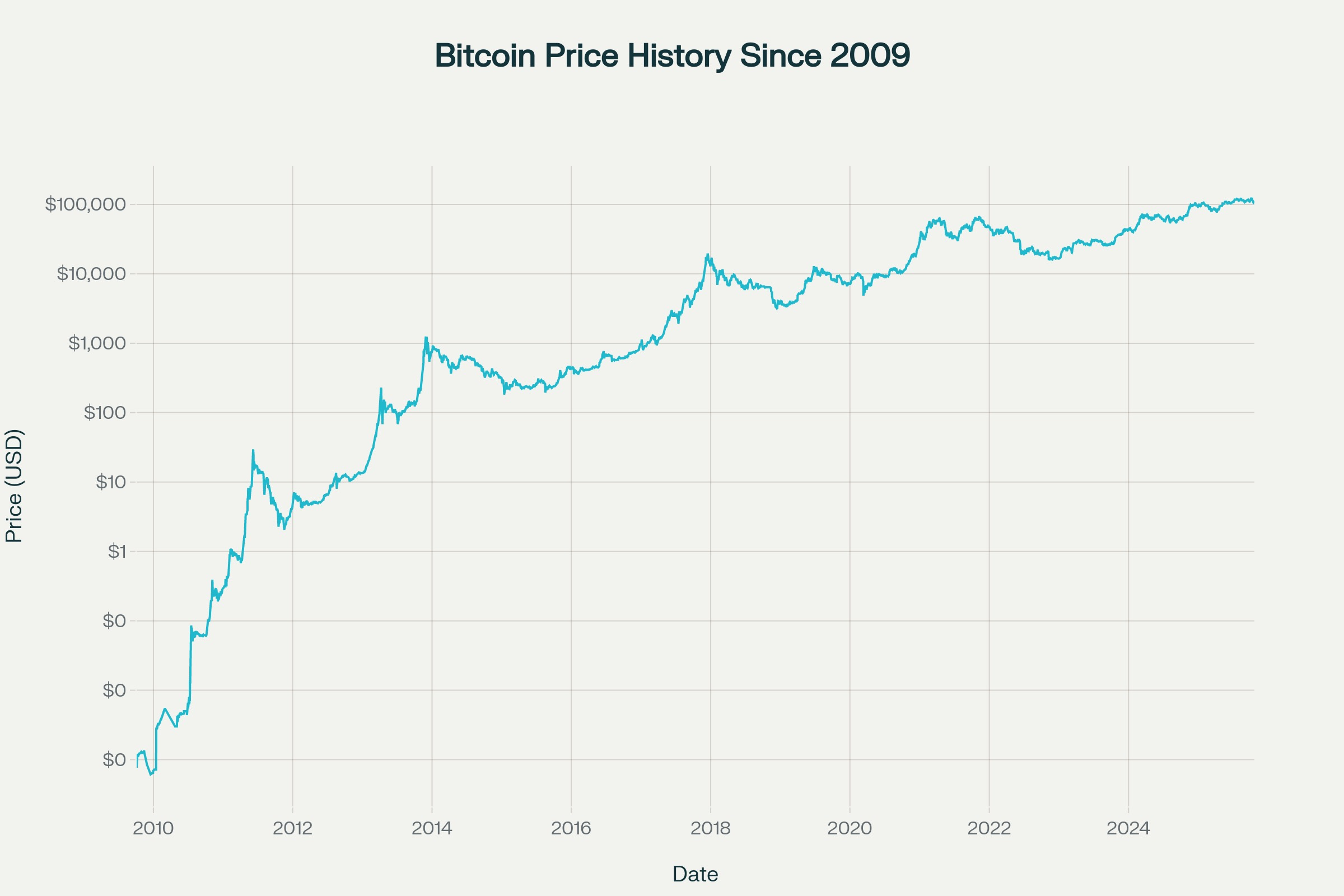
As I write this, the current value of all the BTC in existence is over two trillion US dollars. For a failed experiment in electronic payments, that is a tidy sum.
To add to this mystery, nobody has been able to identify who Satoshi Nakamoto is.
There are several far more interesting blockchain projects than Bitcoin, with much greater utility, but they tend to get dismissed as Altcoins (meaning Alternative Coins), as though only Bitcoin is the real one. The most interesting of these is probably Ethereum.
When I first came across these projects in 2016, I predicted that Bitcoin would be a museum exhibit within five years. I still can’t understand why anybody thinks it has any value. This might be a sign of my stupidity, or it might be an illustration of the aphorism:
Markets can remain irrational longer than you can remain solvent
Commonly attributed to John Maynard Keynes
Only time will tell….
2010s
The Rise of China and the De-industrialisation of the West become Political Issues
I wrote here about the astonishing industrial revolution in China which began after the death of Mao. Western corporations were happy to outsource their supply chains to East Asia in the 1980s and 1990s, with no regard for the impact this had on industrial towns in their home territories. Smug politicians assumed that, as China became wealthier and integrated into the global economy, democracy would spontaneously break out there, despite what had happened in Tiananmen Square in 1989.
In the 2010s, this complacency began to evaporate, as the deprived people living in rustbelt towns demanded to be heard and China began to be perceived as a geopolitical challenger to the power of the West.
Russia Grabs the Crimea and other Ukrainian Territory
The collapse of the Soviet Union in the early 1990s was seen as a triumph for the West. It was assumed in Western political circles that Russia would accept its role as a provider of raw materials for German industry, which would export its high-quality manufactured goods to the growing Chinese market.
Angela Merkel, Chancellor of Germany from 2005 to 2021, oversaw this policy, and was considered to be one of the most competent figures in European politics for doing so.
Vladimir Putin had became President of Russia in 2000 and appeared to want Russia to integrate as a modern state into the Western-dominated political order.
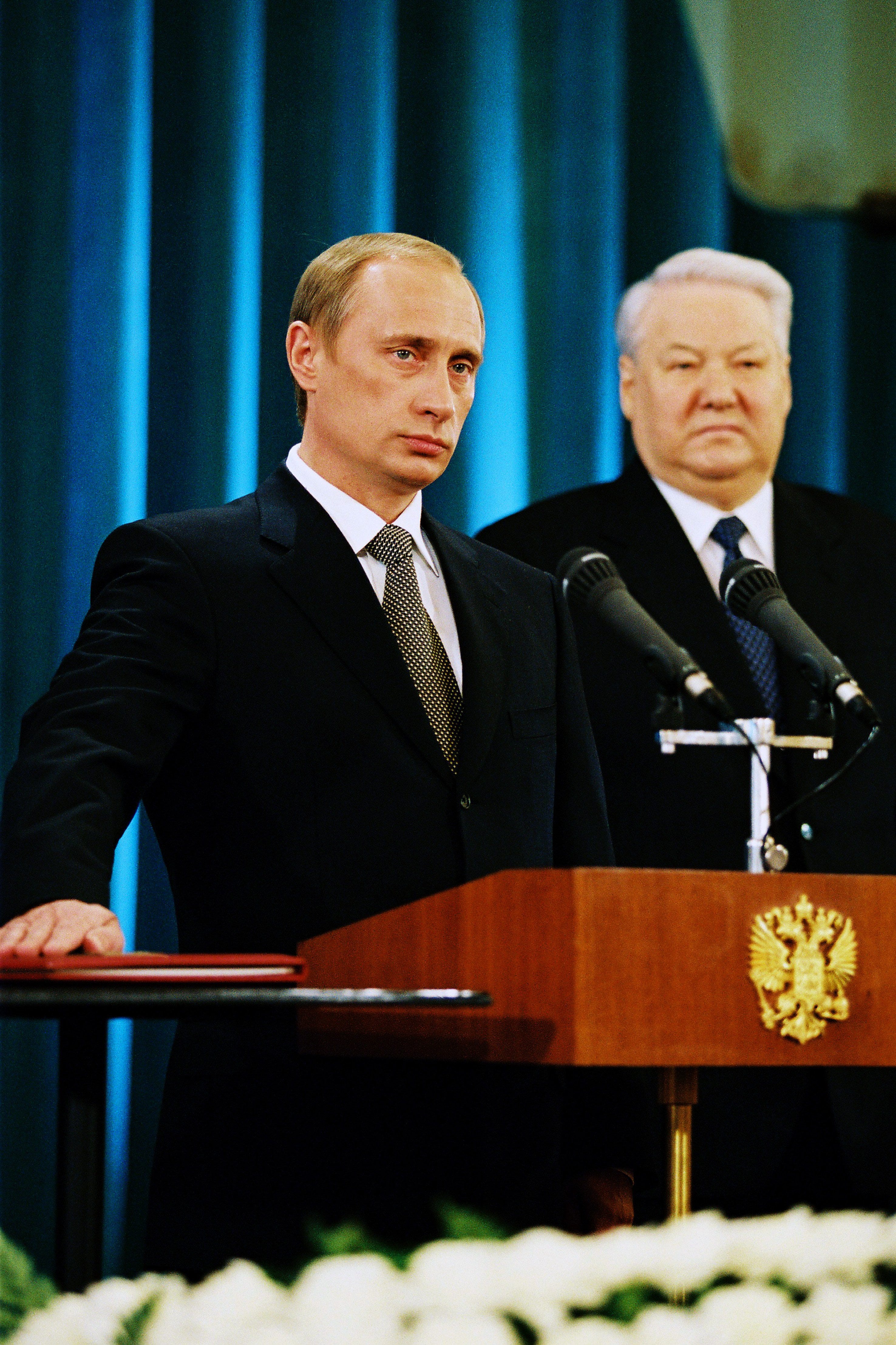
It has recently emerged that Germany was assisting in the upgrade of Russia’s armed forces, which had performed very badly in their 2008 Invasion of Georgia.
It therefore came as a great shock when Russian forces occupied the Crimea and parts of Eastern Ukraine in 2014.
Germany cancelled its assistance to Russian armed forces, but the international response was weak. The Ukrainian Army found itself fighting against a de facto invasion of its territory without much overt support.
The Public Pushes Back against Technocratic Politicians
The political elites that gained power in the late 1990s assumed that they understood their electorates, but made a series of blunders, leading to:
The Brexit Referendum in the UK on 23rd June 2016 leading to the UK leaving the European Union in 2020
Donald Trump winning election as President of the USA on 8th November 2016
They had failed to consider that issues of identity might be important enough to override matters of “economic rationality” or “telling the truth” amongst their electorates.
2020s
Western political elites were hoping that outbreaks of “public irrationality” were temporary and that normal service would soon be resumed.
But further shocks were on their way….
Global Pandemic
Starting in Wuhan, China in 2019, Covid-19 swept the world.
Starting with the Chinese, governments across the world responded by locking-down their populations, an unprecedented response which had previously been considered impossible.
These lock-downs were only lifted as vaccines against Covid-19 were developed.
Pandemics have wrought terrible devastation for at least the last two and a half thousand years, killing a huge number of people.
Compared to previous pandemics, the death rate from this one was low, but the collateral damage to long-term illness, mental health and the global financial system are still being assessed.
Digital Nomads
The lock-downs imposed to protect us against the Pandemic led to as many people as possible working from home.
Despite the fact that this had been possible since the 1980s, hardly anybody had understood that people whose work involves handling information could do that work from anywhere where they could get online, armed with nothing more than a laptop computer and a mobile phone.
The Digital Nomad was finally born:

Russia invades Ukraine
On 21st April 2019, Volodymyr Zelensky won the election campaign to become President of the Ukraine:
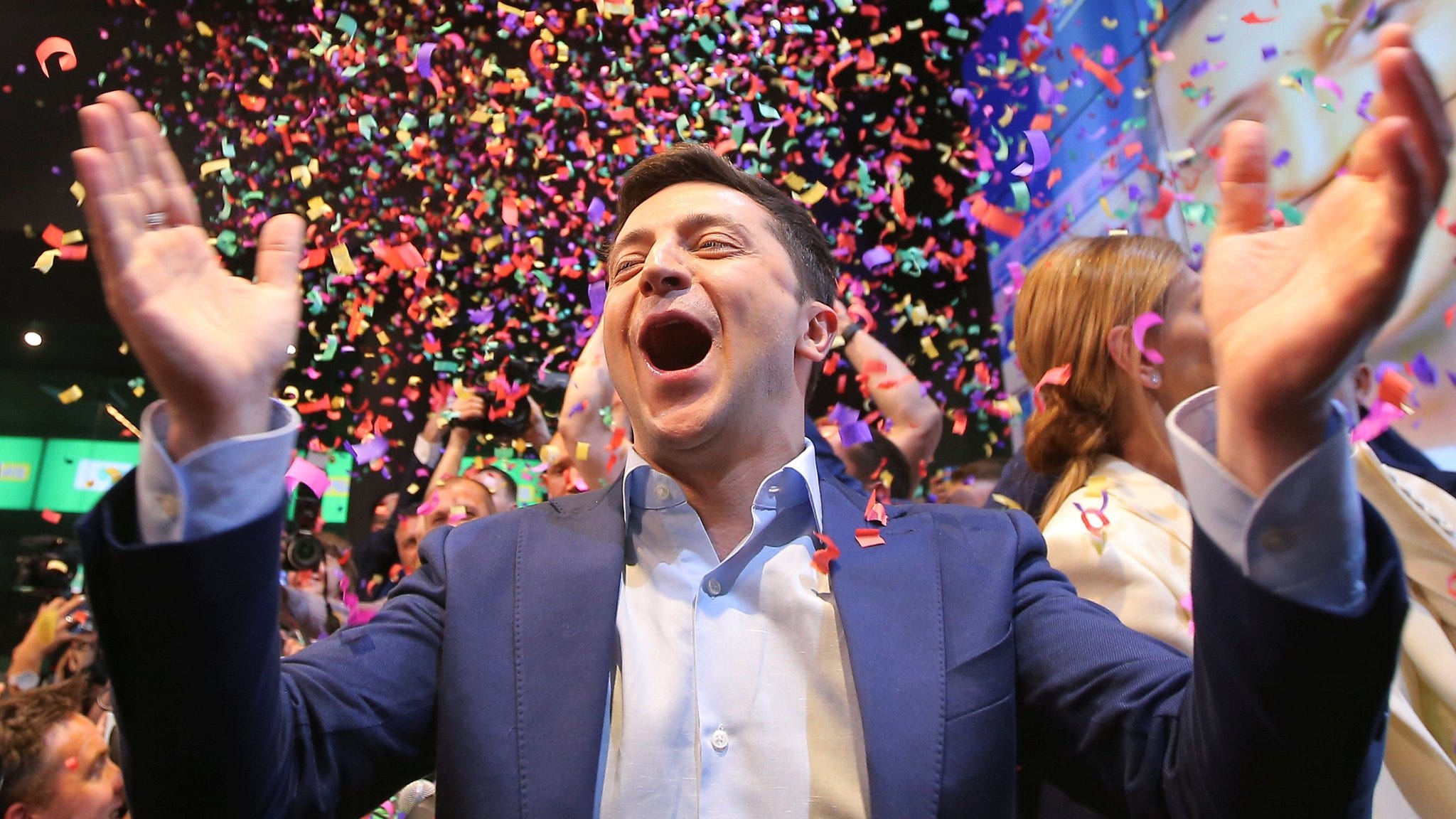
This surprised many people, given that he was a comedian, who had starred in a satire about an ordinary man who accidentally becomes President.
Vladimir Putin appears to have taken this as a sign that Russia should prepare for a full-scale invasion of the Ukraine, which was launched on 24th February 2022.
Putin seems to have expected Zelensky to flee and the Russian army to be marching in a Victory Parade through Kyiv within the week.
But Zelensky did not flee – instead he turned out to be a war leader of Churchillian stature, and the war is still grinding on.
Large Language Models
The field of Artificial Intelligence was launched formally in the mid-1950s. It has attracted large budgets and promised much over the years since, as mentioned here and here. But it is also renowned for undergoing periodic AI Winters of disillusionment.
On 30th November 2022, OpenAI launched ChatGPT as a free online service, launching the latest bout of AI mania.
It is too soon to know whether this will lead to another AI Winter, or heralds the approach of the long-foreseen Singularity….
Hamas Attacks Israel from Gaza
Since its foundation in 1948, the State of Israel has been at the centre of political controversy in the Middle East.
In 2023, it dominated two areas occupied by Palestinians, accepting the administration of Hamas in Gaza and the Palestine Authority in the West Bank. The Israeli authorities thought that this arrangement was stable, so were shocked when, on 7th October that year, Hamas launched Operation Al Aqsa Flood, an attack on southern Israel which killed about 1,200 people. Hamas forces also took over 200 hostages back to Gaza, before the attack could be defeated.
The subsequent invasion of Gaza by the Israeli Defence Force has led to a humanitarian catastrophe for the Palestinian people.
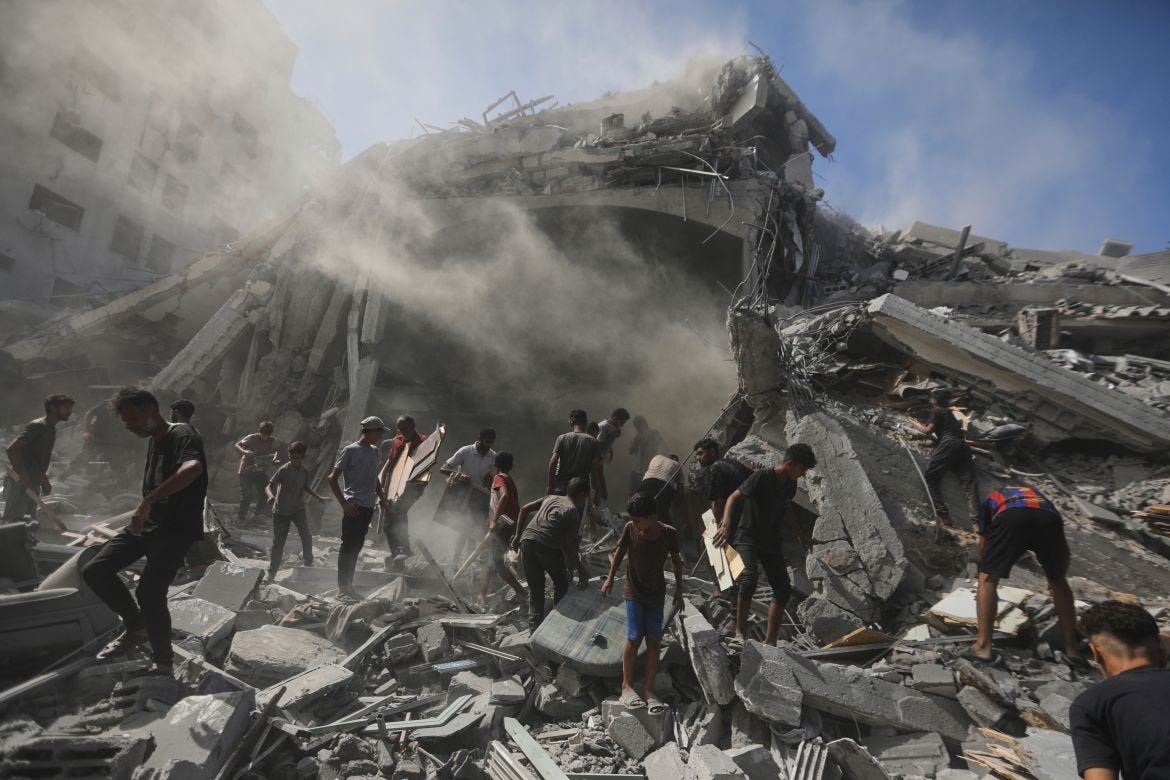
A fragile cease fire currently holds in Gaza…
Donald Trump gets re-elected as President
After four years of Joe Biden as President, and hope that normal politics had re-asserted itself, Donald Trump, convicted felon and notorious liar, was re-elected on 5th November 2024 with a bigger majority than in his first term.
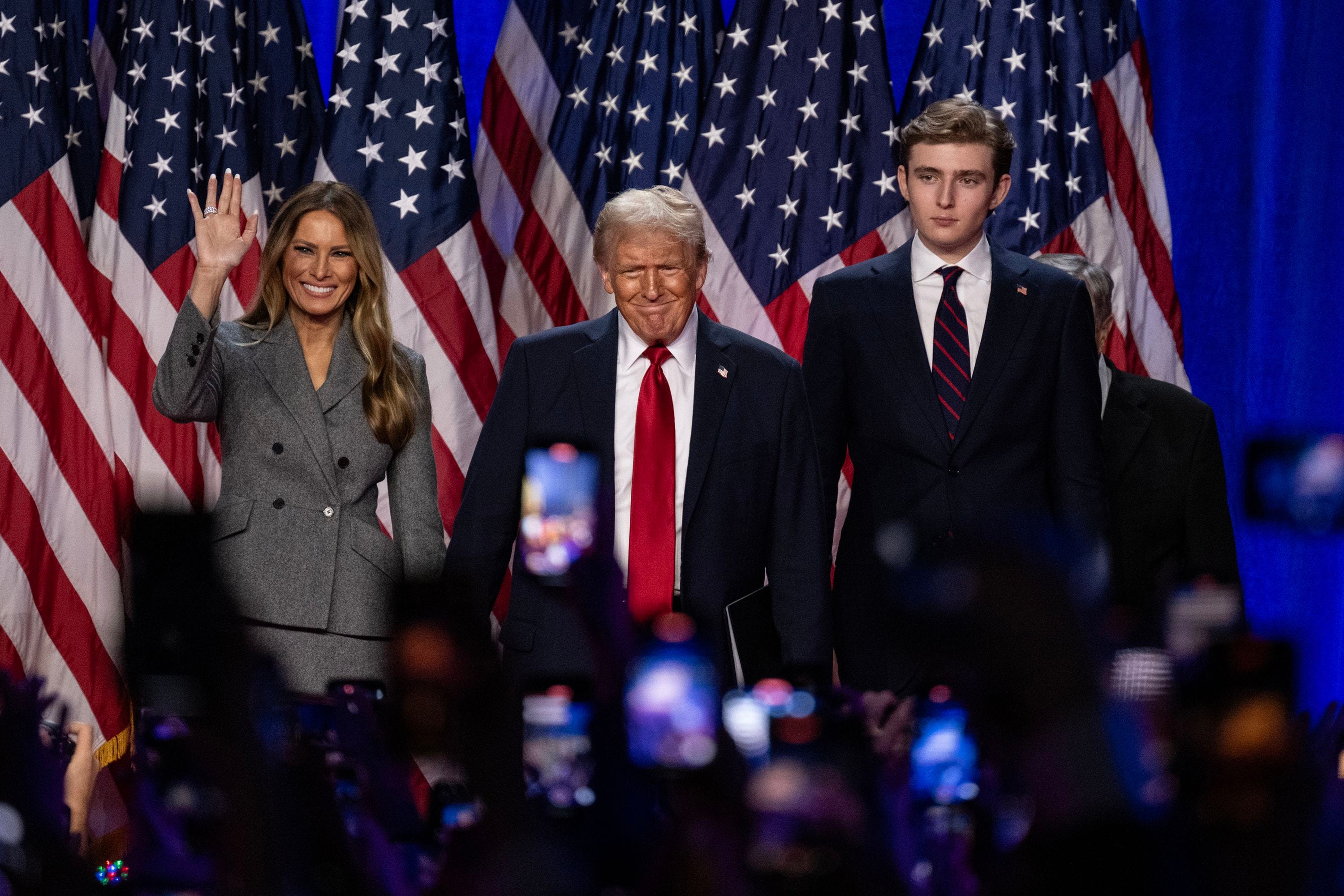
He proceeded to use emergency powers, which are probably illegal, to push through radical changes to global economics and politics.
He appears to have staged a coup without firing a shot, and the US Constitution so far seems to be powerless to do anything about it.
Meanwhile, “populist” politicians are on the rise in the UK and Europe.
No – business-as-usual has not re-asserted itself.
We Live in Strange Times
In this series of posts, I have been building up a database of history since the launch of cybernetics in the 1940s, viewing that history from a cybernetic perspective.
In writing it, I have been struck by how strange this history is. Unexpected events happen all the time, then we rapidly adjust and carry on as normal, forgetting how different things were only moments before.
My next post will conclude this series, then I will begin explaining what light cybernetic thinking can throw on the events of this period, and how it can guide us to understanding and coping with what comes next.
Stay tuned for the final exciting episode of About Cybernetics….